
Sri Chinmoy Gallery
Sri Chinmoy Gallery is a new site offering a daily photo from the multifarious activities of Sri Chinmoy.
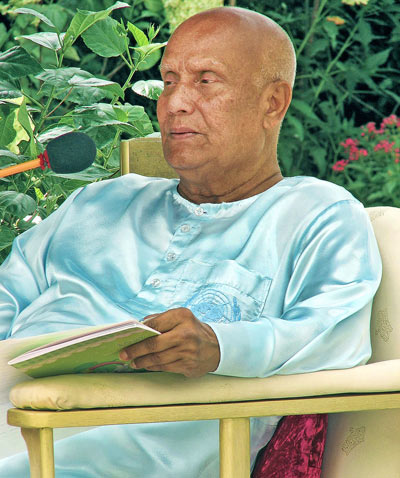
Sri Chinmoy in 2005, photo by Prashputita
The site is maintained and designed by Parimal Repka from Hungary. The site also features, poems, aphorisms and videos.
Sri Chinmoy Gallery.comMusic from the Himalayas
In Kathmandu, in the foothills of the Himalayas, a musical concert was recently offered in celebration of the music of Sri Chinmoy.
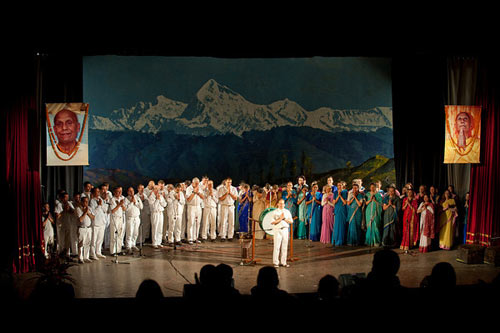
Performers from the Songs of the Soul concert.
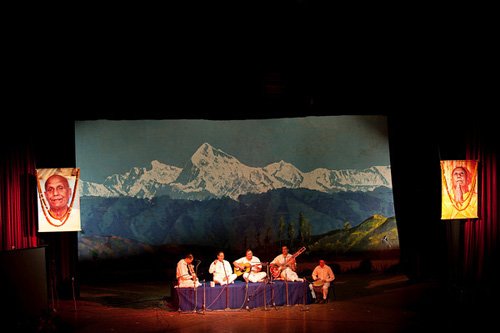
Sitars, guitar and tabla. Coverage at the Himalayan Times
Sri Chinmoy visited Nepal on two occasions in the 1990s. After a visit to Nepal, Sri Chinmoy wrote:
"The moment I use the word 'Nepal', inside my heart something so deep and haunting I feel, like a most melodious tune. Such a sweeter than the sweetest melody I hear when I use the word 'Nepal'. I am very happy to be of service to Nepal, to all the Nepalese hearts, Nepalese souls and Nepalese lives."
- Sri Chinmoy [1. Sri Chinmoy, Sri Chinmoy Answers, Part 22, New York: Agni Press, 2000. ]
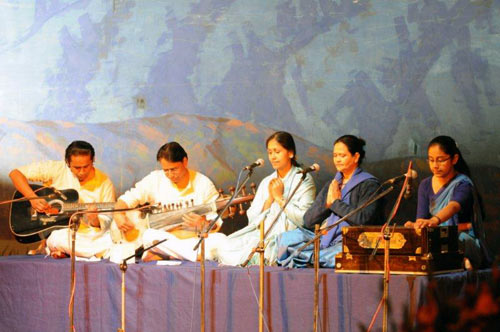
Nepalese performers.
Related- More photos from Kathmandu concert at Songs of the Soul
Photos top two by Jowan
Bhutan, A Country Less Travelled...
While meeting with Sri Chinmoy's students from around the world in nearby Nepal, Ambarish took a side trip to little-visited country of Bhutan....
Introduction
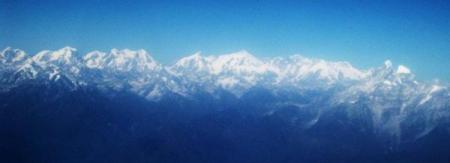
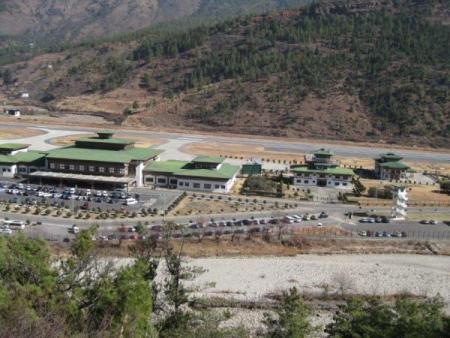
Our appetite was whetted with spectacular views of the Himalayas and most of the world’s highest peak, including Mount Everest. Bhutan is mostly a mountainous country with the two main cities being over 2,200m above sea level. During the 40 minute flight, the captain reminded us to keep our safety belts fastened particularly coming into land as the plane descended through the valleys where we experienced a lot of turbulence. The flight is not for the faint hearted as the pilot made several dramatic manoeuvres’ through the valleys before a fairly sudden landing. Bhutanese are proud to claim that their pilots receive special training and can get piloting jobs with any airlines in the world. It is worth noting that no other airlines are permitted to fly into Paro Airport.
Tourism is third on the list of national industries in Bhutan, behind exporting electricity and farming. The tourism industry is highly regulated where one can only visit through an official tourist agency. All aspects of your travel arrangements are set out and paid for in advance such as itinerary, hotels, meals and excursions within the country. Visa costs are very expensive from $250 upwards the final cost depending on the length of you stay in Bhutan. A group of 8 British climbers paid $24,000 for their visas. Basically, the visa is an entry charge into the country. During your stay in Bhutan, you are required to take a tour guide and a driver who take you on a detailed journey through Bhutan. Bhutan’s policy on tourism is one of ‘Low impact but high value to Bhutan’
A brief history.
In the 17th century, a Tibetan monk arrived in the area, in search of metals and managed to bring together villages and communities. As such, Bhutanese are mostly Tibetan in origin with their 11 dialects of language being a derivation of Tibetan.
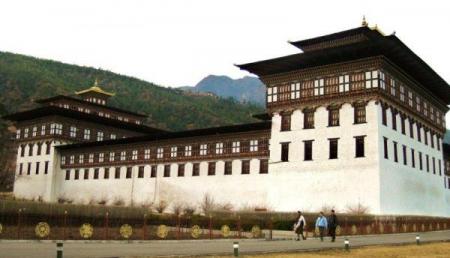
Bhutan is 70% Buddhist, the signs of which are very visible from the country’s emblem, artwork, ornamentation, iconography and temples throughout. The harmony between religion & state is very evident – The Fortress complex in the capital, Thimphu houses both government buildings, crown jewels and a Buddhists monastery.
In 1907, a monarchy was established which still exists today. In the early 70’s the 4th King introduced the concept of ‘Gross National Happiness’, GNH. This is perhaps why Bhutan is best known.
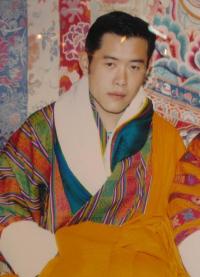
The King, commissioned a Canadian sociologist to formalise the tenets of this philosophy, namely an index to measure the happiness of people and to set out measures to create harmony between spiritual and material well being.
In 2008, the 5th King, then aged 28 amended the constitution and paved the way for the first modern democratically elected government in Bhutan with the main focus being the implementation of GNH.
Eight general contributors to happiness:
- physical, mental and spiritual health
- time-balance
- social and community vitality
- cultural vitality
- education
- living standards
- good governance
- ecological vitality
Some statistics (2008):
- Similar in size, area & shape to Switzerland
- Population – 700,000
- 70% Buddhist & 20% Hindu
- Main source of income - exporting hydro electrical power, mainly to India.
- Bhutanese speak 11 dialects / developed forms of Tibetan.
- National Sport – Archery
- National Flower – Blue Poppy
- National Animal – Takin (looks like a cross between goat & cow)
- Smoking has been banned
- Only 5% of population have internet access
- Only 10% of population have telephones
- 70% live on subsistence farms
- There are no traffic lights in Bhutan
Bhutan also claims to be the only ‘Carbon Sink’ country in the world, i.e. Bhutan produces more energy than it uses. The amount of electricity generated from hydro electrical stations far exceeds that of the energy value of oil and gas imports.
Trade / neighbouring countries
Bhutan’s biggest trading partner is India. India imports Bhutanese electricity and in return Bhutan imports cars, food and the like from India. Bhutan relies on India for the construction of infrastructural projects such as roads, bridges and dams. Higher education in the areas of the humanities and life sciences takes place in Bhutan but for higher degrees in engineering, Bhutanese travel to India.
Influences and traditions
Aside from the Buddhist tradition which is deeply rooted in every day life, most Bhutanese speak Hindi and watch Indian TV, Bollywood movies, Indian soap opera, etc. There are no American fastfood outlets such as MacDonalds, Kentucky, Fried Chicken of cafes such as Starbucks.
It is against their beliefs to kill any animals – all living creatures are sacred. However, that those not mean that they are vegetarian – Bhutan imports meat, fish and poultry from India.
Mountaineering is not permitted. The last expedition took place in the mid 80’s when a British team climbed their peaks – out of respect the climber stopped shot of the peak by a few yards. In Bhutan, they believe it is inappropriate for man to stand on top of a mountain as this invokes negative spirits to descend to earth and claim the souls of their deceased.
Polygamy is permitted in Bhutan, but in practice is very rare as the man, in order to support more than one wife needs to be very wealthy. Divorce is also permitted. Once divorced, a woman with a child / children is very unlikely to re-marry as Bhutanese men will not accept her child / children from her previous marriage.
Impressions / conclusions
First impressions usually establish your level of expectations for your entire experience - the very clean, relaxed environment in the airport was impressive. And this was a reflection of Bhutanese people generally. People are very polite and courteous and see you as a guest in their country, to which they are there to serve. GNH is a reality – Bhutanese people appear genuinely content. They display a broad cultural and educational diversity with dignity, sweetness and generosity of spirit.
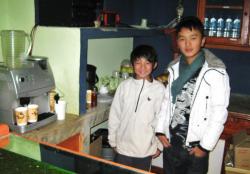
Two gracious smiling Bhutanese kids speaking good English serving coffee to a visitor can more than articulate the objective of this commentary.
Peace Concert at Nobel Peace Center
In 2007, Sri Chinmoy offered a peace concert at the Nobel Peace Center in Oslo, Norway.
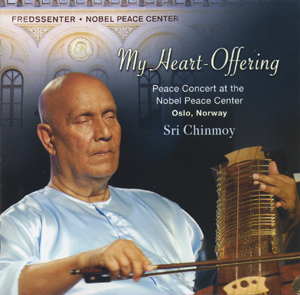
The recording is available at Radio Sri Chinmoy from the recording 'My Heart Offering'.
The recording features performances on the Esraj, Indian and Western Flute and other instruments. This concert was one of the last before Sri Chinmoy's mahasamadhi in October 2007. Throughout his life, Sri Chinmoy sought to be a student of peace.
"Peace. Peace is love unmistakably realised. Peace is joy unreservedly shared. Peace is oneness soulfully expanded. Peace is fulness permanently founded."
- Sri Chinmoy [1. Sri Chinmoy, Inner Peace And World Peace: Agni Press, 1992.]
Nepal Sri Chinmoy Statue
On Monday, January 10th, 2011 a new statue of Sri Chinmoy was unveiled at Nagarkot, Nepal.
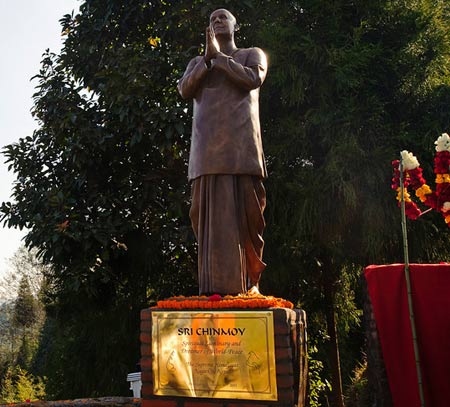
Sri Chinmoy visited Nepal in 1994 and 1999. In 1994, the mountain, Ghenge Liru, part of the Langtang mountain range, which stands in proximity to the statue was dedicated as a Sri Chinmoy Peace Mountain.
" What does peace do? Peace blossoms. What else? Peace spreads. What else? Peace illumines. What else? Peace fulfils."
- Sri Chinmoy [1. Sri Chinmoy, Peace: Agni Press, 1995]
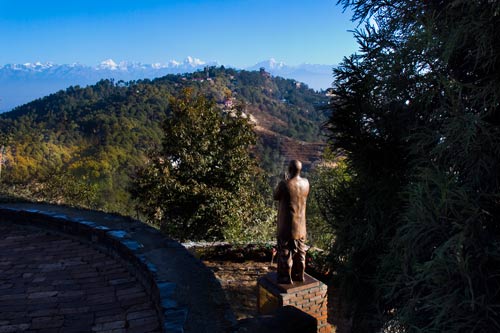
Statue overlooking mountain.
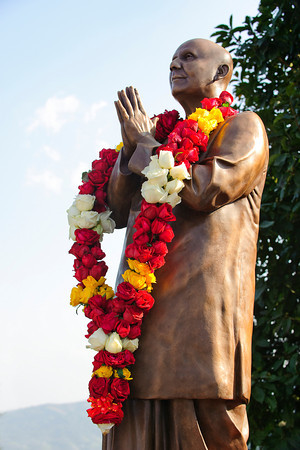
The ceremony was attended by members of the Sri Chinmoy Centre from over 50 different countries and also local dignitaries from Nepal including, Deputy Prime Minister Sujata Koirala and former prime ministers Kirtinidhi Bista and Lokendra Bahadur Chand.
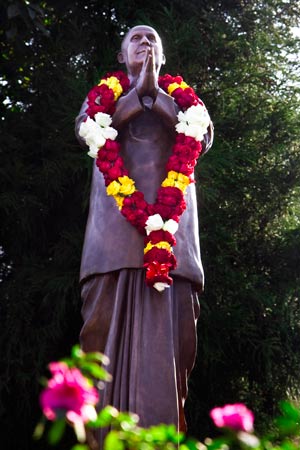
Photos by Prabhakar and Jowan
RelatedFarewell, Sri Chinmoy
Seeking a Spiritual Path
Adhiratha Keefe has published a short account of how he became a seeker and then student of Sri Chinmoy in the early 1970s.
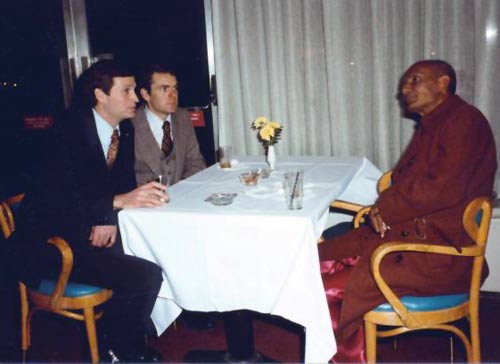
Adhiratha with Sri Chinmoy in early 1970s
Adhiratha also shares some of his experiences as a student of Sri Chinmoy, including participating in the World Harmony Run and being involved in other initiatives for peace.
- ‹ previous
- 144 of 337
- next ›

Except where explicitly stated otherwise, the contents of this site are licensed under a Creative Commons Attribution-NonCommercial-NoDerivs 3.0 Unported License. read more »
SriChinmoyCentre.org is a Vasudeva Server project.