Ultra-Runners racing towards enlightenment
The Sri Chinmoy Marathon Team promote many ultra distance races, including the 24 hour race in London. In the latest edition of "The Week", a popular British news magazine, a featured article was about the efforts of self-transcendence by the various competitors who take on this challenge. 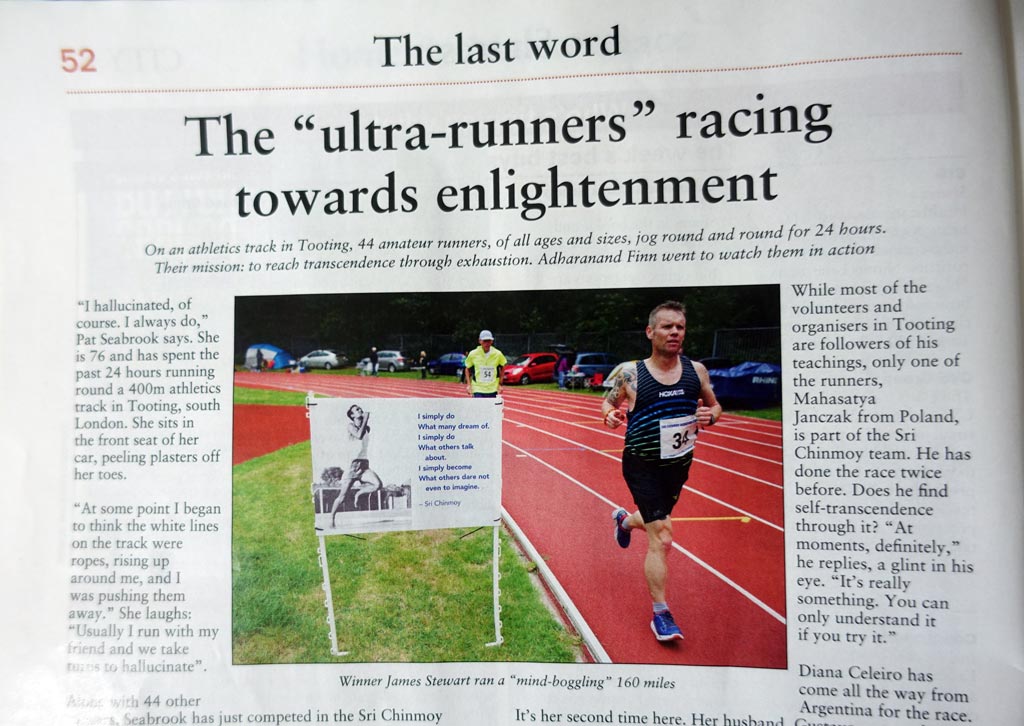
The article, written by Adharanand Finn a journalist for the Guardian, gives glimpses into the motivation and joys of both those helping to set up the race and the runners who spend 24 hours racking up the miles.
 The London 24 hour race was first started 30 years ago by Ongkar Tony Smith, a follower of Sri Chinmoy and founder of the popular running shop Run and Become.
Sri Chinmoy encouraged ultra-running as a means for people to transcend their previous efforts and go beyond their mental limitations. As Shankara Smith, the race organiser, mentions in the article:
“Sri Chinmoy used to say it’s not mind over matter, but heart over mind. If you can’t silence that mind, then you can’t do it, because your mind will tell you you can’t. Here, you can’t tell yourself it’s you versus that mountain, because there is no mountain. It’s just you versus you.”
The article was originally published in the Guardian and syndicated by The Week.
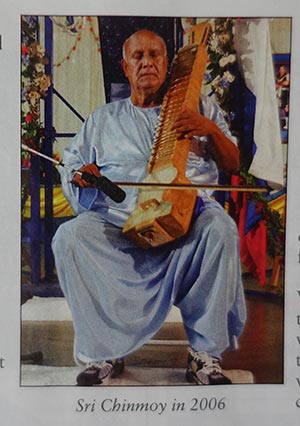
In the photo chosen by The Week - 'Sri Chinmoy in 2006' - Sri Chinmoy was playing the esraj - an Indian stringed instrument. Sri Chinmoy was also seated beneath his weightlifting equipment. Quite often Sri Chinmoy would honour individuals as part of his "Lifting Up the World with a Oneness-Heart" Award. Before lifting, Sri Chinmoy would play the esraj to create a meditative atmosphere. It is an example of how Sri Chinmoy combined meditation, music, and physical, sporting transcendence.
Related
- Original article at the Guardian
- 24 hour race at Sri Chinmoy Races
Meditation techniques
In his writings and talks, Sri Chinmoy offered many different meditation techniques - from simple tips to still the mind - to the use of mantra, music and visualisation.
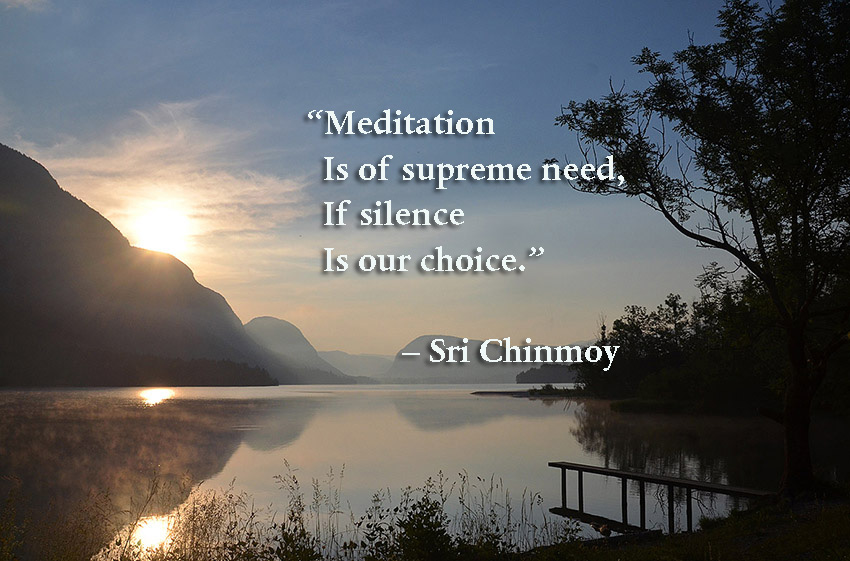
"In order to purify your mind, the best thing to do is to feel every day for a few minutes during your meditation that you have no mind. Say to yourself, "I have no mind, I have no mind. What I have is the heart." Then after some time feel, "I don't have a heart. What I have is the soul." When you say, "I have the soul," at that time you will be flooded with purity."
- Sri Chinmoy
222 Meditation Exercises
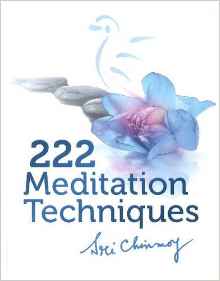
222 Meditation Exercises is a compilation of over 200 different techniques from the writings of Sri Chinmoy.
With a wide range of different exercises, there is enough variety for any seeker to find some meditations which work for him.
It also mentions some of the factors which can help make meditation a more integral part of someone's daily life - through cultivating qualities such as aspiration, gratitude and determination.
The exercises can be a good way for people to give a new focus to their own meditation.
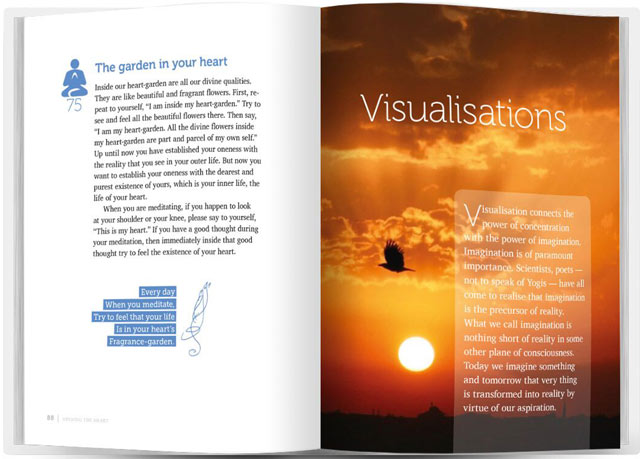 "Inside our heart-garden are all our divine qualities. They are like beautiful and fragrant flowers. First, repeat to yourself, "I am inside my heart-garden." Try to see and feel all the beautiful flowers there. Then say, "I am my heart-garden. All the divine flowers inside my heart-garden are part and parcel of my own self."
- Extract by Sri Chinmoy
The importance of meditation techniquesMeditation is an individual experience. Through developing a regular personal practise, seekers will find ways of meditation which ultimately work for them. Sri Chinmoy says the secret of meditation is for the seekers own soul to come to the fore and it is our own soul which will teach us how to meditate. However, in the beginning we value different techniques and guided meditations which help us to silence the mind and bring forward the heart and soul.
More info on: The Meditation Book
ReviewThe book is well laid out, with excellent pictures and a feeling of simplicity and purity which is conducive to giving a good inspiration to our meditation. It is the kind of book which can be dipped into at regular intervals, allowing the reader to choose the exercises which appeal to them.
Related
- Meditation exercises at Sri Chinmoy Centre
- Guided meditation exercises at Radio Sri Chinmoy
Sri Chinmoy Centre activities in Greece
In recent weeks, members of the Sri Chinmoy Centre from around the world visited Greece to take part in concerts, the Peace Run and meditations for the New Year.
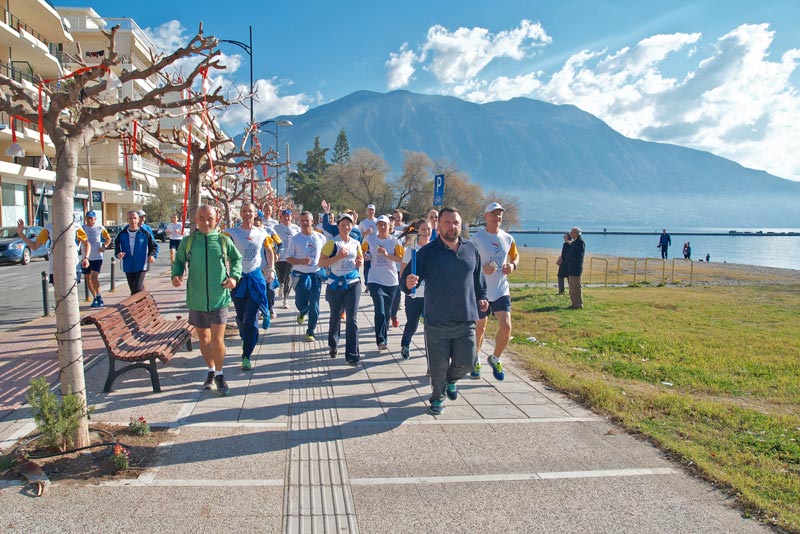
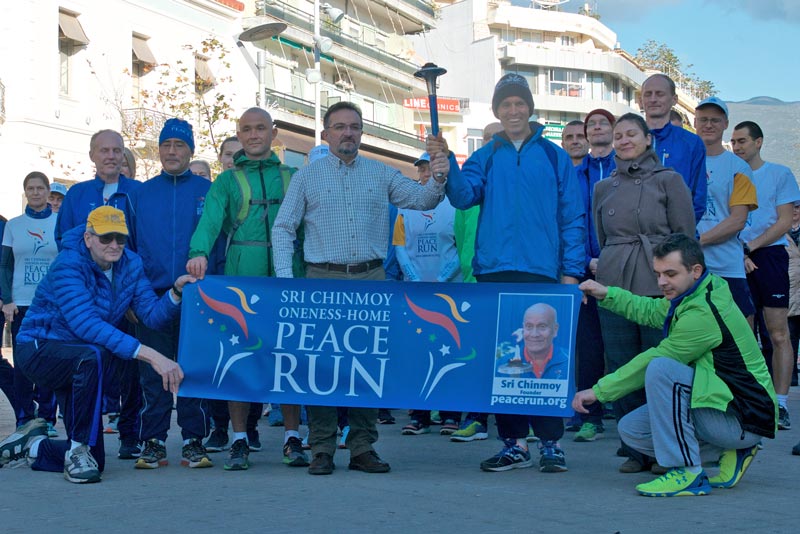
On Boxing day 26th, the Sri Chinmoy Oneness-Home Peace Run was warmly welcomed by the mayor and people of Kalamata during a one off run to mark the Christmas / New Year. The run was joined by local school children and the mayor of Kalamata. (See: Peace Run)
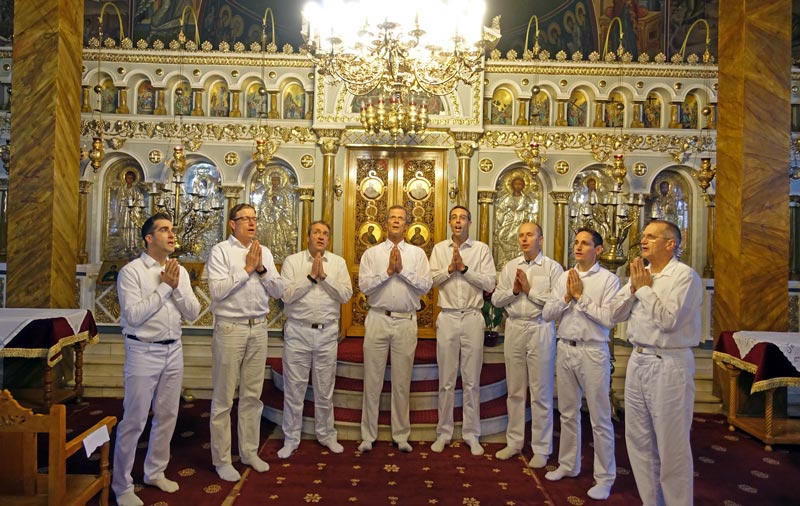
On 3rd of January 2017, the all male acapella choir, Oneness-Dream, performed a concert of Sri Chinmoy’s songs in a church of Kalamata.

The group have toured many countries around the world, performing in churches and sacred venues. It was the first time they had the opportunity to perform in a church of the Greek Orthodox church. The concert was warmly received by the local priest and parishioners.
On the 4th of January, members of the Sri Chinmoy Centre performed a play to a packed audience at the theater in Kalamata.
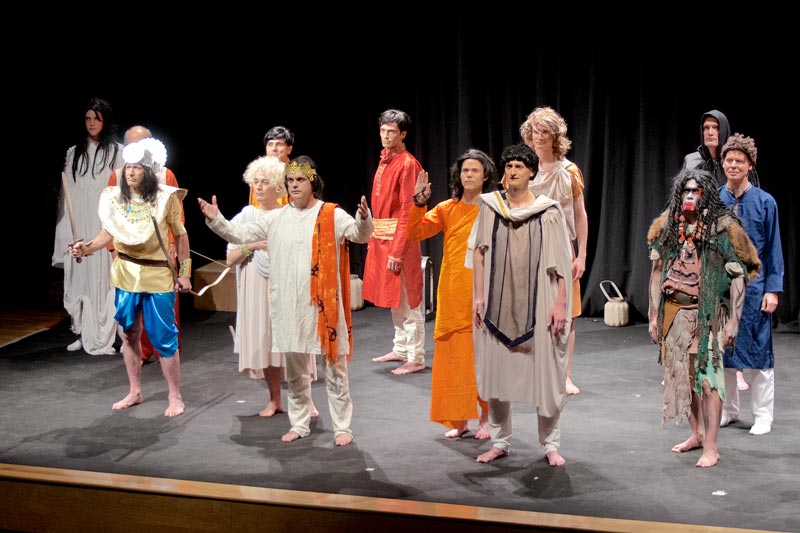
The play, written by Devashishu Torpy, incorporated elements of Greek and Indian culture - combined with excerpts from Sri Chinmoy's own writings - to offer an insight into the shared aspects of the eternal spiritual quest.
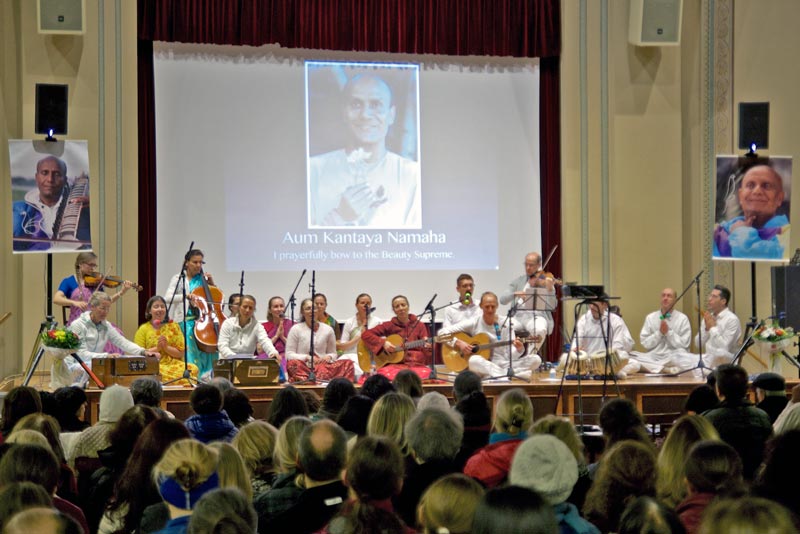
On the 5th of January, there was a Songs of the Soul concert in Athens, where groups of international musicians performed the music of Sri Chinmoy, during a two hour concert. Many people attended and were appreciative of the soulful and uplifting music.
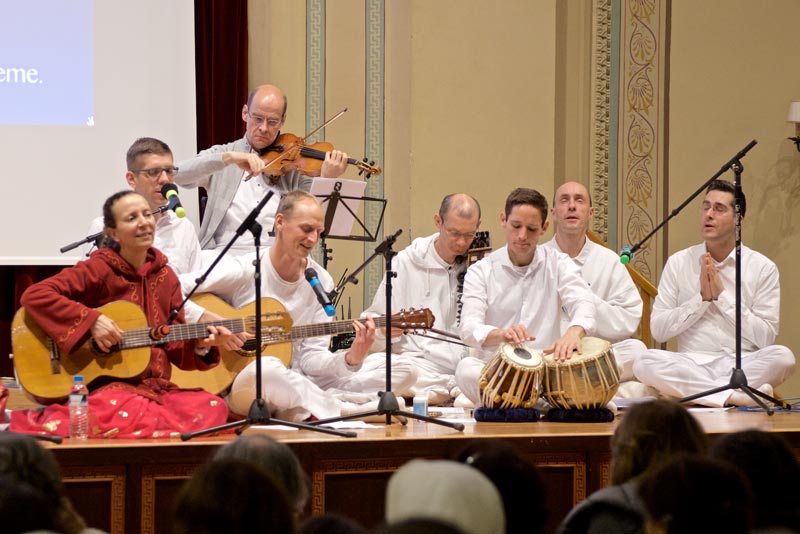
In addition to these activities, members of the Sri Chinmoy Centre, on their annual Christmas festival took part in running races, the performance of plays and daily meditations.
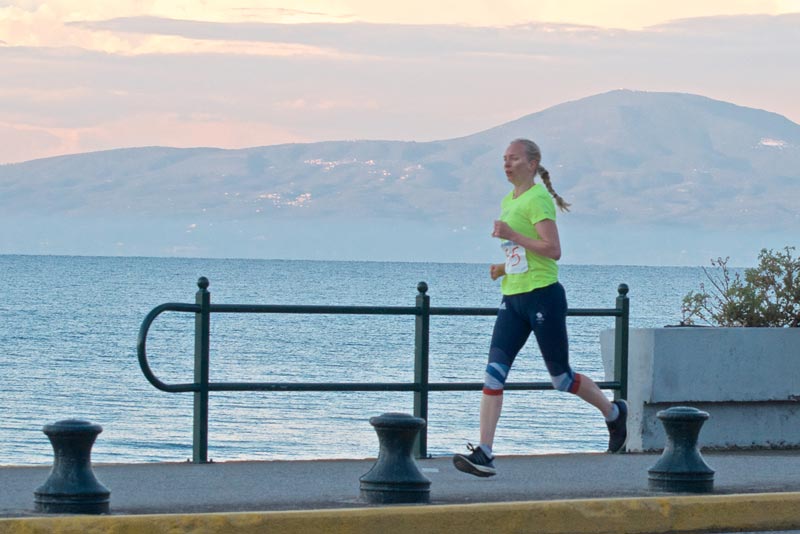
Photos: Yatkara Aleksapolskyy and Tejvan Pettinger
Related- Peace Run in Greece
- Greece Sri Chinmoy Centre
- Play script - "The New Year" - written and directed by Devashishu Torpy
- Play script - "Laosen does the Impossible" a play by Sumangali Morhall
Impossibility Challenger 2016
Impossibility Challenger is an event organised by members of the Sri Chinmoy Centre, where individuals are given the opportunity to test themselves in seeking to transcend their own limitations. During the event, individuals or groups of people can choose any number of challenges which inspires them to seek their own self-transcendence. This can be either to set a new personal best or try to set a new world record.
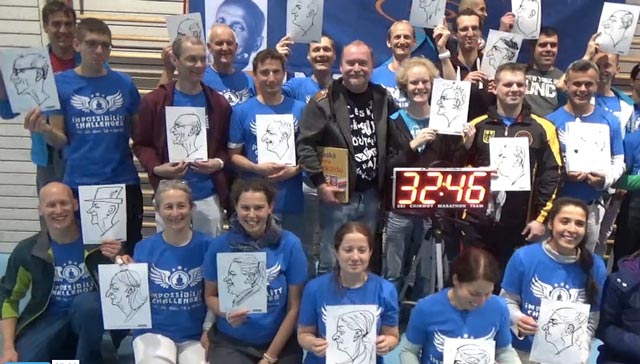
This year event was held in Berlin, Germany. During the weekend there was a varied collection of events - ranging from attempts to run the fastest 100 metres whilst wearing flippers - to reciting an entire poetry book. Notable events included
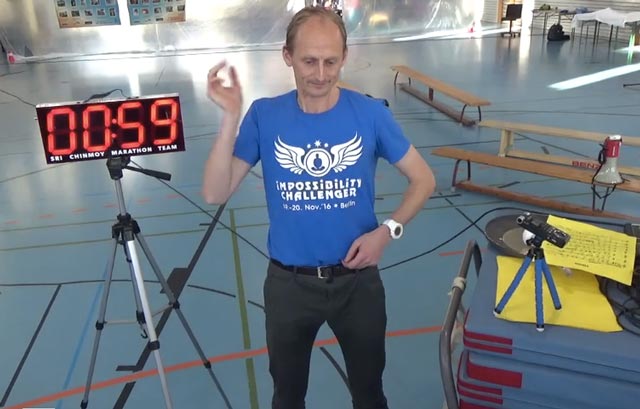
- Most one handed claps in a minute
- Juggling 3* 5kg balls
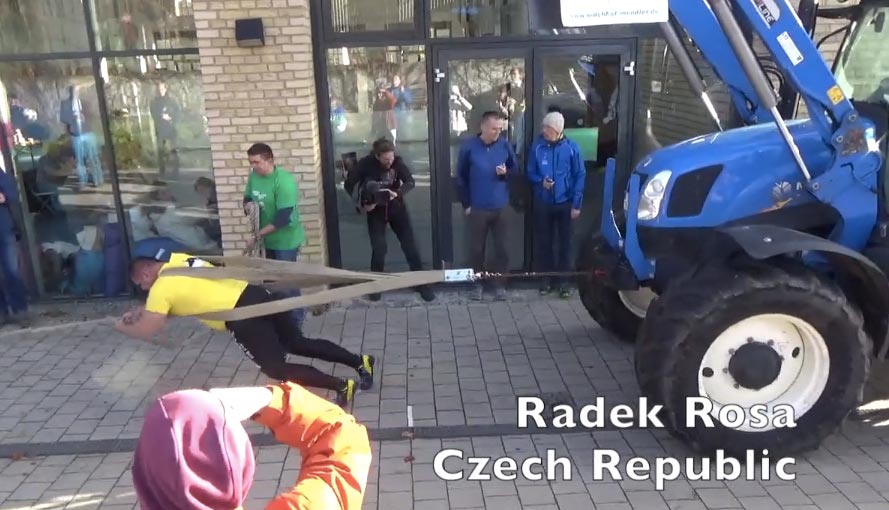
- Pulling 10 tonne tractor, plus driver
- Memorising longest sequence of binary numbers in one minute
- Most push ups on raw eggs in a minute.
- Mahiruha's Klein attempt to memorise and recite 843 poems from Sri Chinmoy's poetry book Transcendence-Perfection.
The event was founded by Sri Chinmoy who sought to encourage people to try gain joy from transcending their achievements and capacities.
- Sri Chinmoy
Video: Devashishu Torpy
Four attitudes in chess – all this reminds me...

(top image - Lion by my friend Satyamurthi Miotello)
After I wrote a few things about the game of chess and how something from the game we might be able to use in life, again I realised some other principles which do seem to happen in our lives and are represented in chess (and surely many other activities – maybe all of our activities!) I see the very same structure in Kendo (japanese fencing) while sparring with fellow kendokas.
This time what came to mind are the different attitudes to get to our goals. In chess, the goal is to checkmate the opponent´s king. In Kendo, to score a solid hit, ippon. A few ways to get there are what I thought of now, as a chess and kendo beginner.
The first and most basic attitude is to play tricks on the opponent, hoping he will not see through them and lose. It can work. But even if it works, you know you were not playing solid chess and had to rely on your opponent´s overlooking of the move. And, if it does not work, then you played a huge risk on your part. Now you did your move, which was not enough to win, but your opponent can counterattack on your weakened flank. You are exposed. It is like a game of chance. Neither you nor your opponent will improve by playing such games. At some point, you just give up playing, as there is no permanent solution. This reminds me of the human body of an aspirant.
The second way is by agression. You attack constantly your opponent, hoping to breach through his defenses, even at the cost of sacrificing a part of your army. It might work, and you end up overwhelming your playmate. Or, if he is good in defense, you might sacrifice all your army like waves hitting the side of a fortress and finally, when the tide ebbs, you cannot do anything else and simply remain defeated. There is so much tension in these strategies, but at least one can learn a little from the played game. Much is based on reflex and not introspection. If there where more in depth thought, players would be able to enjoy more and learn more, but this is already an improvement over playing tricks. All this reminds me of the emotive vital of an aspirant.
The third way is by caution. You calculate everything from the standpoint of not losing the game. You enter into such a defense that your opponent will not be able to breach. However, you are then playing alone. You and your playmate will not be able to learn so much from the game, since a living connection between moves is needed to play a beautiful game. Like an instrument trying to solve problems greater than itself. On it´s own sole capacities, it will fail. This reminds me of the intellectual mind of an aspirant.
The fourth way is by constant positioning and building up over chess fundamentals, the root of the game. You and your opponent play sensible moves, neither wholly reacting in defense against new threats nor simply creating a fortress over yourself. Each move is fluid, based on a steady source of game knowledge and maturity, and leading to ever increasing levels of beauty and counterplay. Each movement has two or three applications in itself, based on fundamental principles that will take you to a higher level of structure – not only inside yourself, but also with your playmates. You do not try to win – you do not try to defeat your opponent. You simply try to do your very best, inspired by your playmate’s own efforts at performing his personal best. This is a sound strategy of growth and progress, leading to fulfilment, ease of mind and plenty of energy to do what is needed. This reminds me of the intuitive heart of an aspirant.
That is how I would like to perform all my actions. (Alas!)
When the divine attitude
Purifies the human attitude
Peace dawns in our aspiration-life.Sri Chinmoy, Peace: God's Heart-Home, part 1, Agni Press, 1995
Now, if you are inspired to read on to a higher level, I can recommend Sri Chinmoy’s talk “The five paths of love and devotion”. This particular talk has been priceless in my life.
Agnikana's Group tour the UK and Ireland
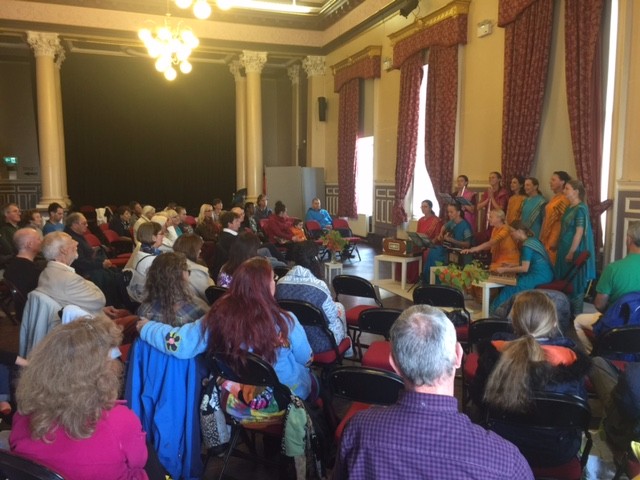
Recently, the Czech music group "Agnikana's Group" toured parts of the British Isles to give free concerts of Sri Chinmoy's music. The group played in the major capitals of London, Cardiff, Dublin and Edinburgh, and also York, Bristol and Ipswich.
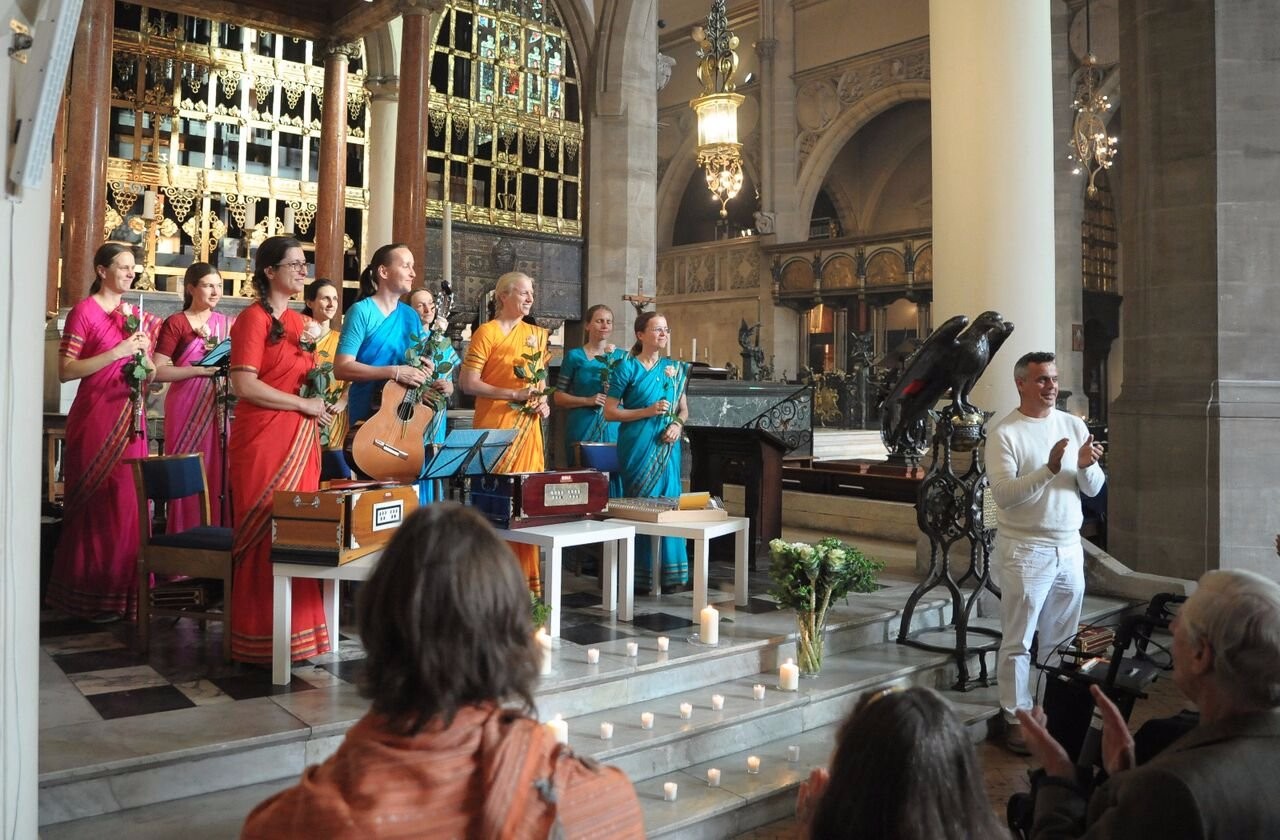
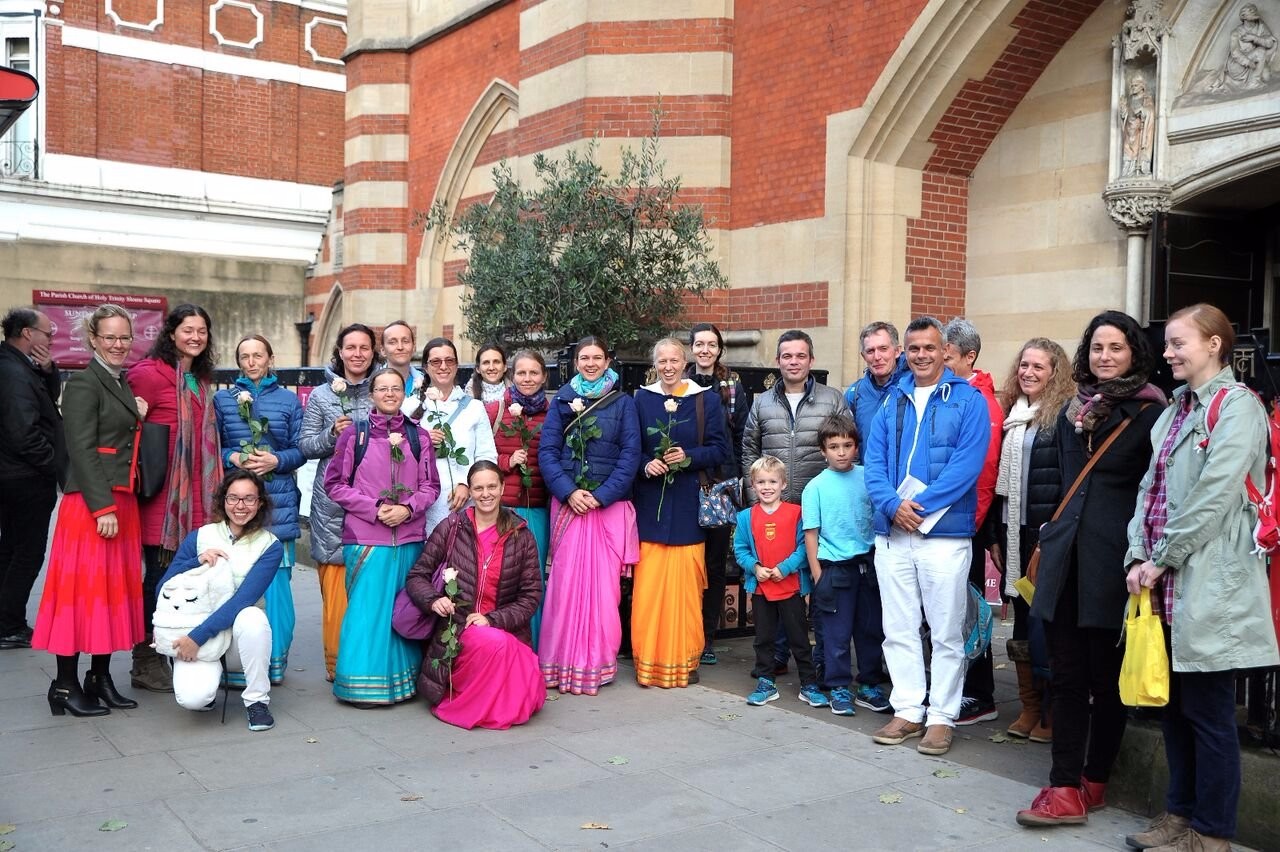
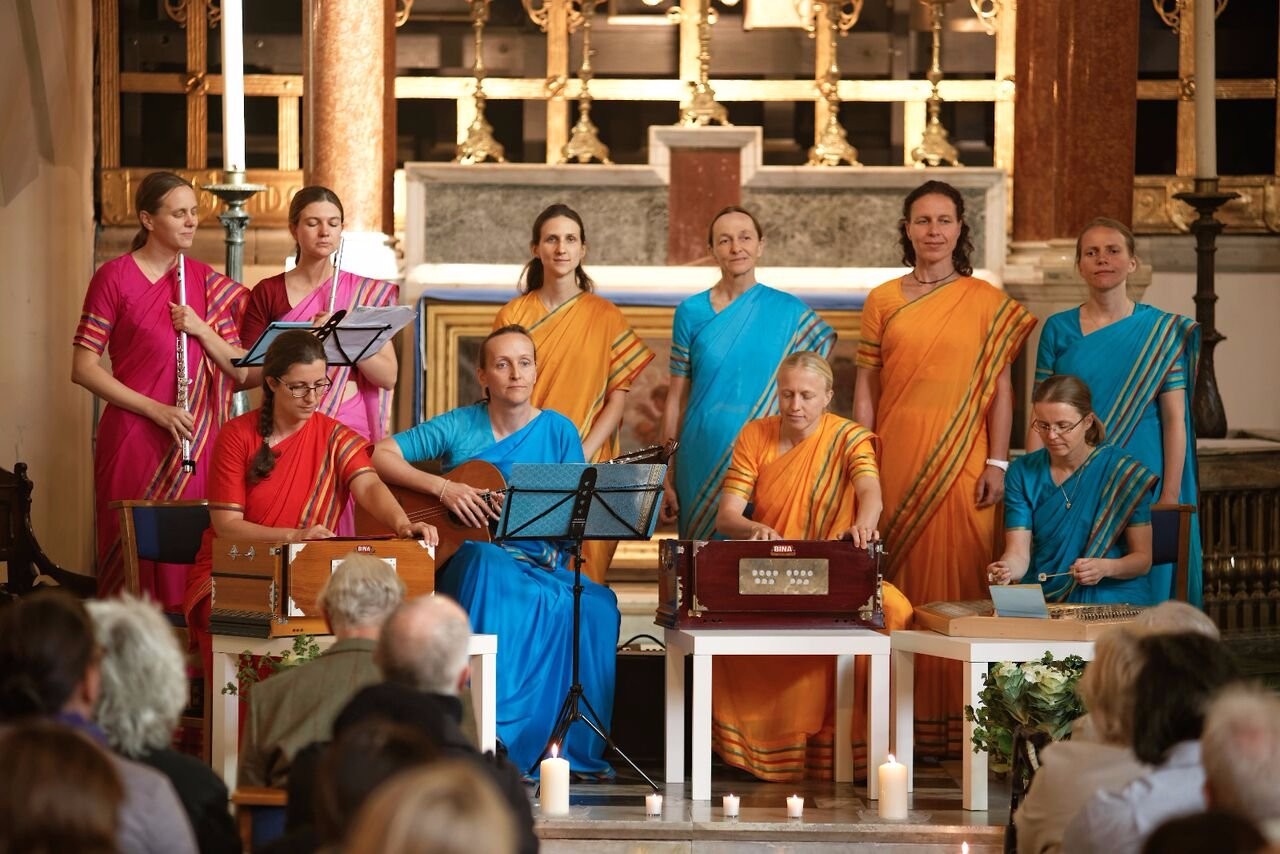
Agnikana's group is an all female ensemble who perform the music of Sri Chinmoy. The concerts were well attended and received positive feedback with audience members describing the music as 'beautiful, peaceful and 'connecting with the soul'.
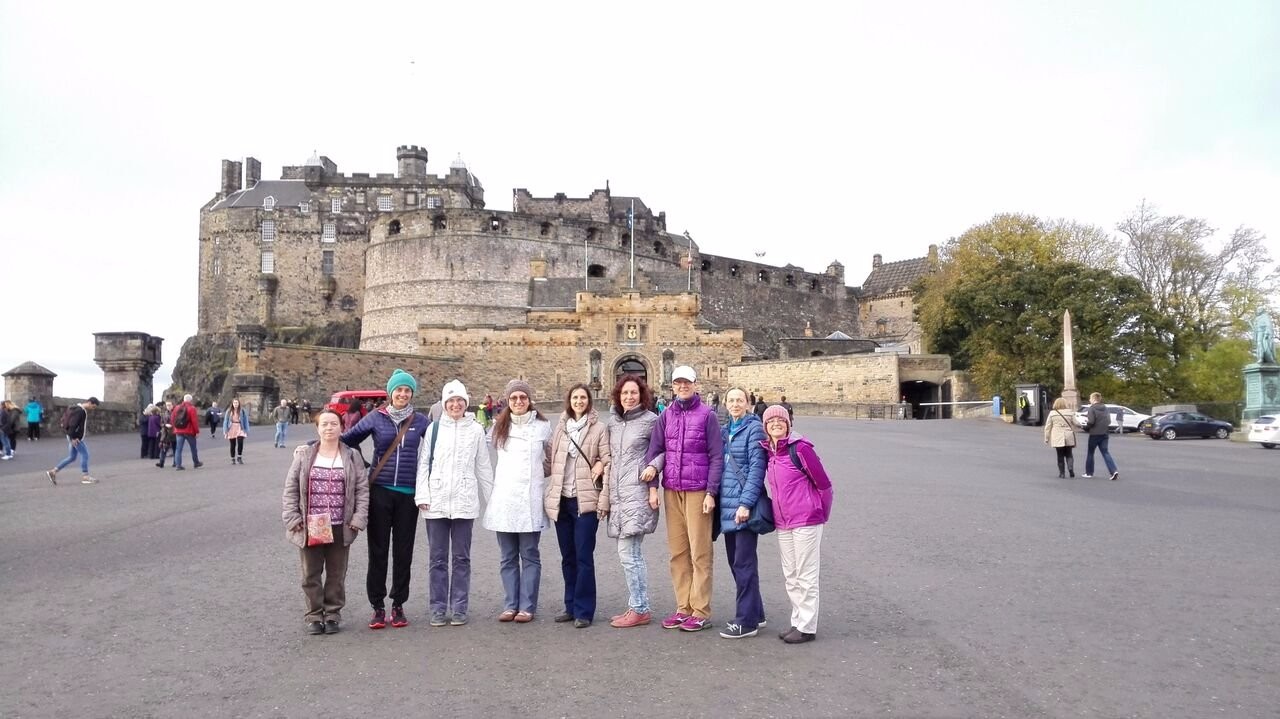
The group played in Edinburgh.
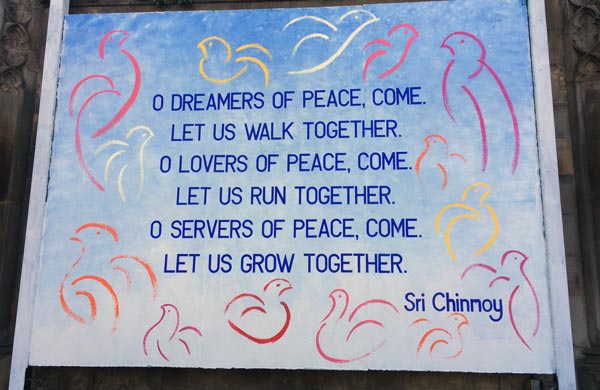
The previous week, the Sri Chinmoy Centre had been part of the Edinburgh Festival of Peace and Spirituality, with this artwork displayed at St John’s Church in Princes Street.
Related
- Agnikana's Group at Radio Sri Chinmoy
Yoga and the UN Culture of Peace
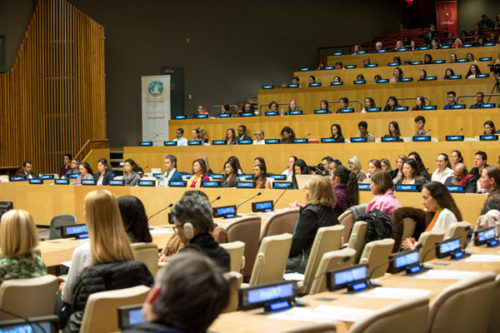
The Sri Chinmoy Choir had the honour of performing arrangements of Sri Chinmoy's songs dedicated to the UN and peace at a programme entitled "Yoga and the UN Culture of Peace." The event was held at the United Nations in the prestigious Economic and Social Council Chamber the evening of 28 October 2016. Hosted by His Excellency Ambassador Durga Prasad Bhattarai, the Permanent Representative of Nepal to the UN, the event was webcast live, and the video is also available on the UN website (UN live weblink). The choir opened the programme, after the Deputy Permanent Representative of Nepal, Mr. Nirmal Raj Kafle, offered a few remarks on behalf of Ambassador Bhattarai, declaring that the wealth of yoga belongs to humanity in general.
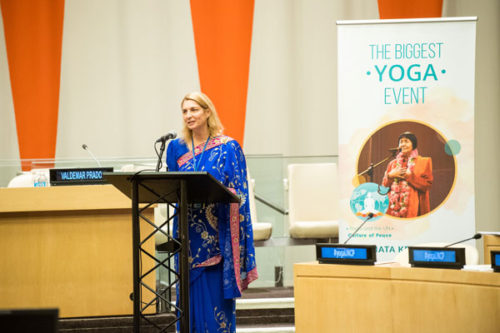
Ms. Nilima Silver, Programme Coordinator of Sri Chinmoy: The Peace Meditation at the United Nations and UN Staff Member, was invited by the organizers to serve as Master of Ceremonies for the evening. In introducing the Choir, she explained that in 1970, then UN Secretary-General U Thant invited spiritual leader Sri Chinmoy to conduct meditations for peace at UN Headquarters in New York. Until his passing in 2007, Sri Chinmoy offered his multifaceted inspiration to the UN community through twice-weekly meditations, concerts and other programmes for peace. Sri Chinmoy also founded a non-governmental organization accredited with the UN Department of Public Information, the international Sri Chinmoy Centre, which provides humanitarian aid and promotes a culture of peace.
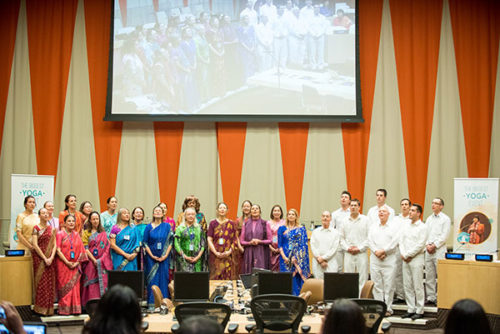
The singers are honoured to continue in this spirit. On this occasion the choir started with a poem by Sri Chinmoy, followed by several of his songs dedicated to peace and to the UN, with arrangements by members of the Choir.
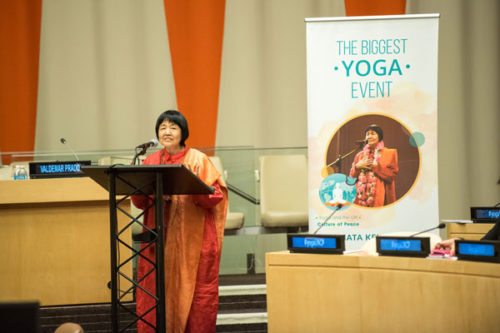
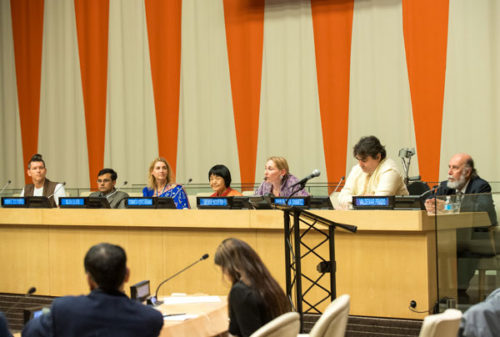
Following the choir, the guest of honour, Yogmata Keiko Aikawa, gave the Keynote Address, which was followed by a panel discussion, with questions and answers.
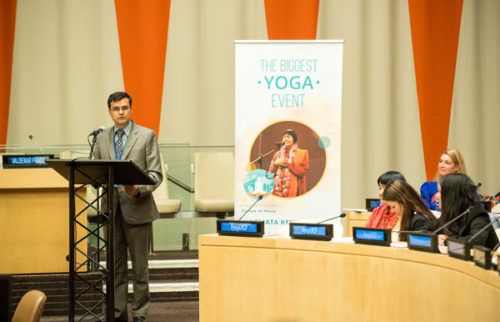
The event served as a continuum to the UN International Day of Yoga, first proposed by Indian Prime Minister Narendra Modi during his speech to the General Assembly in September 2014. The Assembly later unanimously adopted a resolution recognizing that “wider dissemination of information about the benefits of practising yoga would be beneficial for the health of the world population,” and declaring 21 June the International Day. (See link to the resolution and draft showing initial co-sponsors)
See also: Yoga and the UN Culture of Peace Program.pdf
- A/69/L.17 Draft Resolution - Day of Yoga and Co-Sponsors (2014-Nov-07)
- A/69/L.17/Add.1 Added C0-Sponsors for Day of Yoga Draft (2014-Dec-11)
- A/Res/69/131 International Day of Yoga Resolution (Adopted by UN General Assembly 2014-Dec-11)
- Background to International Day of Yoga (excerpts from UNGA Meeting Record A/69/PV.69 and UN Press Release GA/11601)
Fuller excerpts and related timeline links
- See Links at UN site: http://www.un.org/en/ga/69/resolutions.shtml (Resolution and Meeting Record in 6 Languages: Arabic عربي, Chinese 中文, English English, French Français, Russian Русский, Spanish Españo)
-
-
Resolution No. A/RES/69/131PlenaryAgenda Item No. 124Meeting Record: A/69/PV.69 / Date: 11 Dec 2014 / Press Release: GA/11601/ Vote: without a voteDraft: A/69/L.17 & Add.1Topic: International Day of Yoga
-
- With photos of SG-Yoga: http://www.un.org/en/events/yogaday/message.shtml
- SG ST/SM/17867-Obv/1631 Release:-“respect all” : http://www.un.org/press/en/2016/sgsm17867.doc.htm
- United Nations at Sri Chinmoy.org
- UN Web TV
- ‹ previous
- 94 of 337
- next ›

Except where explicitly stated otherwise, the contents of this site are licensed under a Creative Commons Attribution-NonCommercial-NoDerivs 3.0 Unported License. read more »
SriChinmoyCentre.org is a Vasudeva Server project.